
What Is an AI Management System (AIMS)?
Artificial intelligence is increasingly used across modern organisations — from automated decision-making and data analysis to AI-powered products and services. As AI adoption grows, organisations need a structured way to ensure these systems are used responsibly, monitored effectively, and governed appropriately.
Without clear governance, organisations may struggle to understand how AI systems make decisions, who is accountable for them, or how potential risks should be monitored and controlled. An Artificial Intelligence Management System (AIMS) provides this structure.
This article explains what an AI Management System is, why organisations need one, and how it supports responsible AI governance.
Definition: What Is an AI Management System?
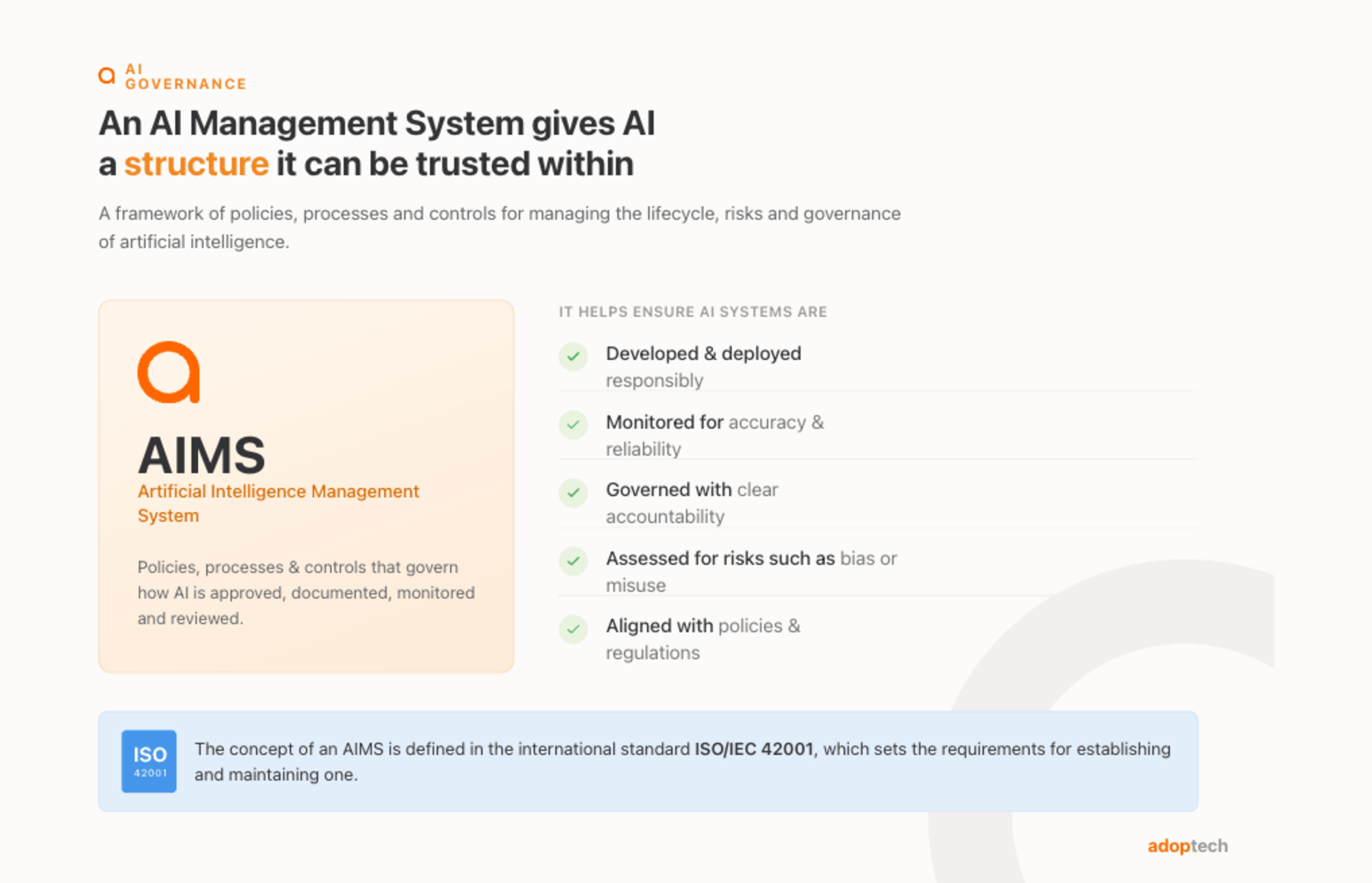
An Artificial Intelligence Management System (AIMS) is a framework of policies, processes, and controls used by an organisation to manage the lifecycle, risks, and governance of artificial intelligence systems.
In practice, this means organisations define how AI systems are approved, documented, monitored, and reviewed throughout their lifecycle, ensuring that AI systems are:
- developed and deployed responsibly
- monitored for accuracy and reliability
- governed with clear accountability
- assessed for risks such as bias or misuse
- aligned with organisational policies and regulations
These governance activities help organisations ensure AI systems operate safely, produce reliable outcomes, and align with both internal policies and emerging regulatory expectations. The concept of an AIMS is defined in the international standard ISO/IEC 42001, which provides requirements for establishing and maintaining such a system.
Why Organisations Need an AI Management System
AI technologies can introduce new types of risk that traditional governance frameworks do not fully address. Many organisations are adopting AI faster than governance processes can adapt, which can create gaps in oversight, documentation, and accountability.
Examples include:
- biased or unfair automated decisions
- lack of transparency in AI outputs
- unreliable or inaccurate models
- misuse of AI systems
- unclear accountability for AI-driven actions
An AI Management System helps organisations create consistent governance and accountability around AI use.
What Does an AI Management System Do?
An AIMS provides a framework for managing AI across its entire lifecycle — from initial design and development through deployment, operation, monitoring, modification, and eventual retirement. It ensures that governance, risk management, accountability, and oversight are applied consistently at every stage.
This typically includes processes for:
An AIMS establishes governance throughout the AI lifecycle to ensure AI systems are designed, developed, acquired, deployed, operated, modified, and retired in a controlled and accountable manner. Organisations may implement approval processes before introducing new AI systems, conduct periodic reviews of existing systems, and maintain records demonstrating that governance requirements have been met.
Organisations maintain an inventory of AI systems used within the business, including internally developed models and third-party AI tools. This helps organisations understand where AI is being used across the business and which systems may require governance or regulatory oversight.
Potential risks associated with AI systems are identified and assessed. These may include bias, reliability issues, security concerns, or unintended impacts. Risk assessments often evaluate the potential impact of incorrect outputs, the sensitivity of data used, and whether automated decisions could affect individuals.
Roles and responsibilities are defined to ensure there is clear accountability for AI systems and their outcomes. Organisations may designate system owners, risk reviewers, or oversight committees responsible for monitoring AI systems.
AI systems are monitored to ensure they continue to operate as expected and produce reliable results. This may include reviewing outputs, tracking model performance metrics, or identifying unexpected behaviour over time.
Processes are established to detect, investigate, and respond to problems arising from AI systems. This may include investigating incorrect outputs, addressing bias concerns, or temporarily suspending systems that behave unexpectedly.
What Types of Organisations Need an AIMS?
An AI Management System may be relevant for any organisation that:
- develops AI models or algorithms
- integrates AI into digital products
- uses AI tools to support decision-making
- deploys AI for internal analytics or automation
Examples include:
- SaaS companies building AI-powered products
- financial services firms using AI for risk modelling
- organisations using AI copilots or automation tools
- technology providers delivering AI-enabled platforms
Organisations may interact with AI in different roles — some develop their own AI systems, others integrate AI capabilities into products, and many deploy third-party AI tools internally. These different roles create different governance responsibilities and influence how an organisation implements its AIMS.
ISO/IEC 42001 recognises that not every control will apply equally to every organisation. Annex A controls should be considered in the context of the organisation's role in the AI ecosystem. Even organisations that only use third-party AI tools may require governance processes to manage associated risks, since they remain responsible for how AI systems are used within their business operations.
How ISO 42001 Defines an AI Management System
ISO/IEC 42001 provides the first internationally recognised framework for implementing an AI Management System. The standard outlines how organisations should:
- establish governance structures for AI
- perform AI risk assessments
- implement operational controls for AI systems
- monitor AI performance and outcomes
- continually improve AI governance practices
These requirements follow a management system approach similar to other ISO standards, where organisations implement policies, procedures, monitoring, and continual improvement processes. By implementing an AIMS aligned with ISO 42001, organisations can demonstrate that their AI systems are managed in a structured, responsible, and auditable way.
Key Components of an AI Management System
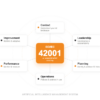
While implementations vary between organisations, most AIMS frameworks include several core components. Together, these create a governance structure that ensures AI systems are managed consistently across teams and projects.
How an AIMS Differs from Traditional IT Governance
Traditional IT governance focuses primarily on technology infrastructure and information security. AI governance extends beyond these areas because AI systems can generate decisions, predictions, or content that directly influence business processes and individuals.
AI governance introduces additional considerations, such as:
- algorithmic bias
- explainability of automated decisions
- reliability of AI-generated outputs
- ethical use of AI technologies
- human oversight of automated systems
An AI Management System provides governance processes designed specifically to address these challenges.
Benefits of Implementing an AI Management System
Organisations implementing an AIMS often find it easier to manage the complexity of AI systems and demonstrate responsible governance to regulators, customers, and partners. Implementing an AIMS can help organisations:
- improve trust in AI systems
- manage AI risks more effectively
- demonstrate responsible AI practices
- support regulatory compliance
- prepare for certification under ISO 42001
For organisations increasingly relying on AI technologies, a structured management system provides a way to ensure AI is used safely, responsibly, and transparently.
Relationship Between AIMS and ISO 42001
An AI Management System is the operational framework, while ISO 42001 provides the requirements and guidance for implementing that framework.
Organisations that implement an AIMS aligned with ISO 42001 can pursue certification, demonstrating that their AI governance practices meet internationally recognised standards. Certification can also provide external assurance that the organisation has implemented structured processes for managing AI risks and oversight.
Key Takeaways
An Artificial Intelligence Management System (AIMS) is a structured framework used by organisations to govern the lifecycle, risks, and oversight of AI systems. An effective AIMS enables organisations to:
- identify and manage AI risks
- implement clear governance and accountability
- monitor AI systems and outcomes
- demonstrate responsible use of artificial intelligence
As AI becomes embedded in business operations and digital products, management systems like AIMS will play an increasingly important role in ensuring that AI technologies are deployed responsibly. Many organisations are therefore beginning to formalise AI governance as part of their broader risk management and compliance strategies.
Frequently Asked Questions
AIMS stands for Artificial Intelligence Management System.
An AI Management System helps organisations manage the risks, governance, and lifecycle of artificial intelligence systems.
Yes. ISO 42001 specifies requirements for establishing and operating an Artificial Intelligence Management System.
Organisations using third-party AI tools may still need governance processes to manage risks associated with those systems.
An AIMS is conceptually similar to other management systems, such as ISO 27001, but focuses specifically on governance and risk management for artificial intelligence systems.
Ready to implement an AI Management System?
Adoptech helps organisations of all sizes establish and certify their AIMS efficiently — combining intelligent automation with UK-based compliance specialists.
Talk to our team