ISO 42001 and the EU AI Act: How They Work Together
Artificial intelligence is becoming a critical part of modern business systems. For organisations operating in the UK and EU, two frameworks are becoming increasingly important: ISO/IEC 42001 and the EU AI Act. Although they serve different purposes, they are closely related — and many organisations are implementing ISO 42001 as a practical way to prepare for the governance expectations introduced by the EU AI Act.
What Is the EU AI Act?
The EU Artificial Intelligence Act is the first comprehensive regulatory framework designed to govern the use of artificial intelligence in the European Union. The legislation introduces a risk-based approach to AI regulation, meaning that obligations increase depending on the level of risk posed by an AI system.
In practice, this means organisations must first identify whether their AI systems fall into regulated categories and then implement appropriate controls such as documentation, risk assessments, and monitoring processes. The Act broadly categorises AI systems into four levels:
| Risk Level | Description |
|---|---|
| Unacceptable risk | AI systems that are prohibited |
| High risk | AI systems subject to strict regulatory requirements |
| Limited risk | AI systems requiring transparency obligations |
| Minimal risk | AI systems with limited regulatory requirements |
High-risk AI systems may include technologies used in areas such as:
- recruitment and employment decisions
- credit scoring and financial services
- healthcare diagnostics
- biometric identification
- critical infrastructure management
Organisations deploying these systems must implement governance processes to ensure that risks are identified and managed appropriately, such as documenting how the AI system works, performing risk assessments before deployment, monitoring performance after release, and ensuring humans can intervene when necessary.
What Is ISO 42001?
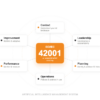
ISO/IEC 42001 is an international standard that provides requirements for establishing and operating an Artificial Intelligence Management System (AIMS). The standard helps organisations implement governance processes that ensure AI systems are:
- properly documented
- monitored for performance and reliability
- assessed for risks such as bias or misuse
- subject to appropriate oversight and accountability
These requirements are implemented through an Artificial Intelligence Management System (AIMS), similar in structure to management systems used in standards like ISO 27001 or ISO 9001. In practice, this means organisations define policies, assign responsibilities, document AI systems in use, and regularly review whether those systems are operating safely and as intended.
Unlike the EU AI Act, ISO 42001 is not a law. Instead, it provides a structured management system framework for responsible AI governance.
Key Difference Between ISO 42001 and the EU AI Act
The two frameworks have different roles.
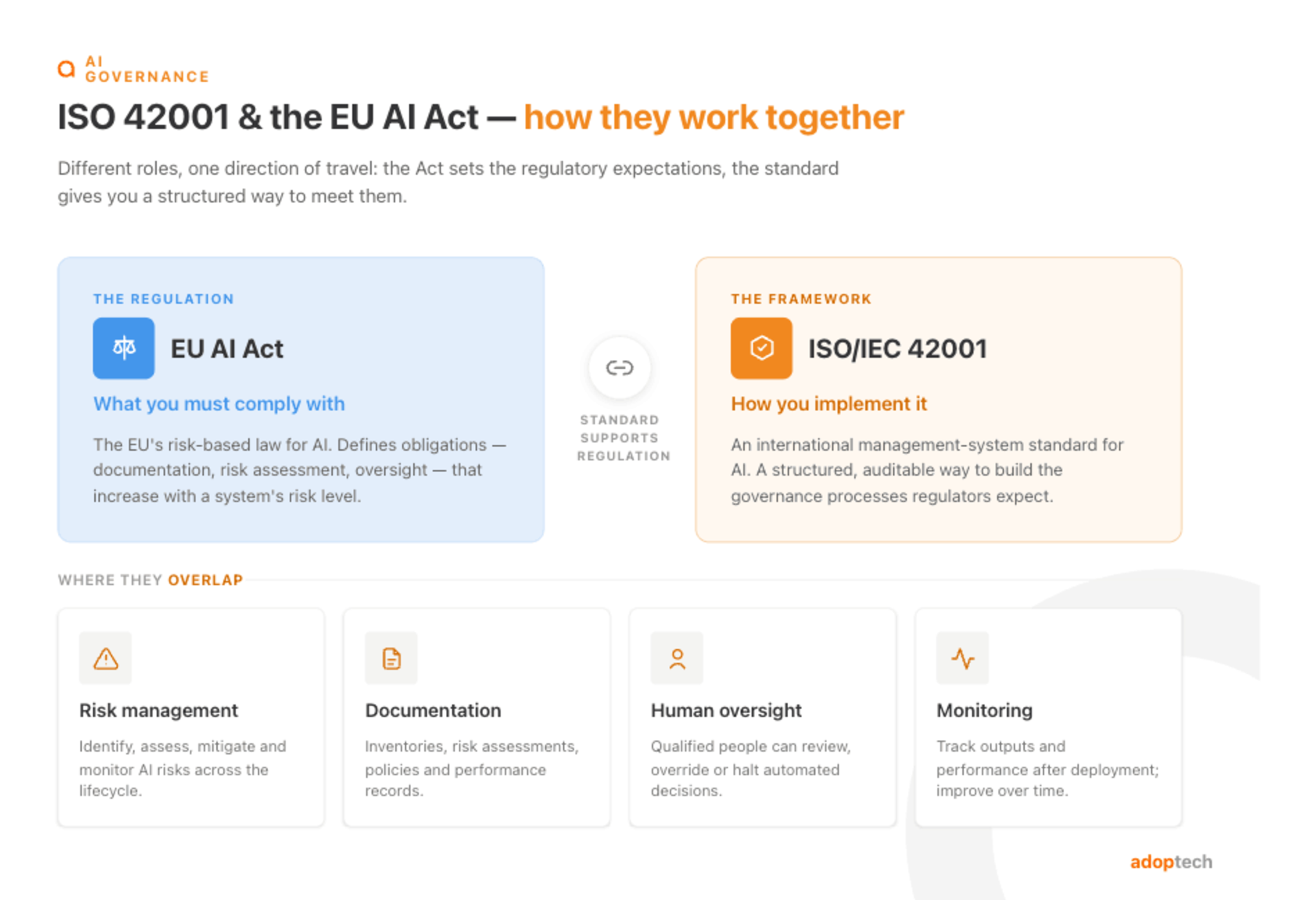
Legal regulation governing certain AI systems. Defines what organisations must comply with and sets regulatory expectations.
Management system standard for AI governance. Provides a structured framework organisations can use to build internal processes to meet those expectations.
In practice, many organisations use ISO 42001 to help structure their approach to AI risk management in a way that aligns with what regulators expect.
How ISO 42001 Supports EU AI Act Compliance
Although ISO 42001 does not replace the EU AI Act, it helps organisations implement many of the governance processes that regulators expect. Several areas of overlap include the following.
The EU AI Act requires organisations operating high-risk AI systems to implement risk management processes. ISO 42001 similarly requires organisations to identify AI-related risks, assess potential impacts, implement mitigation controls, and monitor risks throughout the lifecycle of AI systems. These processes typically include evaluating how AI systems might cause harm, such as producing biased outcomes, making incorrect decisions, or being used in unintended ways.
The EU AI Act requires organisations to maintain technical documentation for certain AI systems. ISO 42001 also emphasises documentation, including AI system inventories, risk assessments, governance policies, and monitoring and performance records. Maintaining these records helps organisations demonstrate to regulators that their AI systems were designed, tested, and deployed responsibly.
The EU AI Act requires appropriate human oversight for many high-risk AI systems. ISO 42001 similarly emphasises governance structures that ensure AI systems are not operating without appropriate supervision or accountability. For example, organisations may need to ensure that AI-generated decisions can be reviewed by qualified personnel and that humans have the ability to override or halt automated decisions when necessary.
Under the EU AI Act, organisations may be required to monitor the performance and behaviour of AI systems after deployment. ISO 42001 includes processes for monitoring AI outputs, reviewing system performance, identifying unexpected outcomes, and implementing improvements where necessary. This is particularly important for AI systems that continue learning or operating in changing environments, where performance may shift over time.
Why Many European Organisations Are Adopting ISO 42001
As AI adoption increases, organisations are recognising that informal or ad-hoc governance approaches are often insufficient to manage regulatory and operational risks. For organisations operating in Europe, ISO 42001 provides a structured way to implement AI governance practices aligned with regulatory expectations.
Implementing ISO 42001 helps organisations establish governance processes that align with emerging regulatory frameworks such as the EU AI Act.
Certification under ISO 42001 allows organisations to demonstrate to customers, regulators, and partners that AI systems are being managed responsibly.
Many organisations purchasing AI-enabled products increasingly ask suppliers questions about AI governance, transparency, and risk management. ISO 42001 certification can help provide assurance in these areas.
An Artificial Intelligence Management System ensures that AI systems are governed consistently across the organisation, rather than managed in isolated teams or projects.
Will ISO 42001 Become Important for EU AI Act Compliance?
ISO 42001 is not formally required by the EU AI Act. However, international standards are often used by regulators and organisations as practical frameworks for implementing governance requirements.
Many organisations therefore view ISO 42001 as a useful foundation for building the governance processes needed to comply with evolving AI regulations in Europe. By implementing ISO 42001, organisations can establish structured processes for risk management, documentation, and oversight that regulators increasingly expect when assessing AI systems.
Key Takeaways
The EU AI Act and ISO 42001 serve complementary roles in the governance of artificial intelligence.
- The EU AI Act establishes regulatory requirements for certain AI systems
- ISO 42001 provides a management system framework that helps organisations implement structured AI governance
For organisations operating in the UK and European Union, adopting ISO 42001 can help create the governance processes needed to manage AI responsibly and prepare for regulatory expectations. Organisations that begin implementing structured AI governance early may find it easier to adapt as regulatory expectations around AI continue to evolve.
Frequently Asked Questions
No. ISO 42001 is not a regulatory requirement and does not automatically guarantee compliance with the EU AI Act. However, the governance processes implemented through ISO 42001 may support preparation for regulatory obligations.
No. The EU AI Act does not require organisations to implement ISO 42001. It is a voluntary standard.
Many European organisations are adopting ISO 42001 because it provides a structured framework for AI governance that aligns with emerging regulatory expectations.
Yes. Organisations implementing ISO 42001 can demonstrate that they have formal governance processes for managing AI risks, monitoring AI systems, and maintaining accountability.
Preparing for the EU AI Act?
Adoptech helps organisations implement ISO 42001 and build the AI governance processes needed to meet evolving regulatory expectations — with expert UK-based support throughout.
Talk to our team